
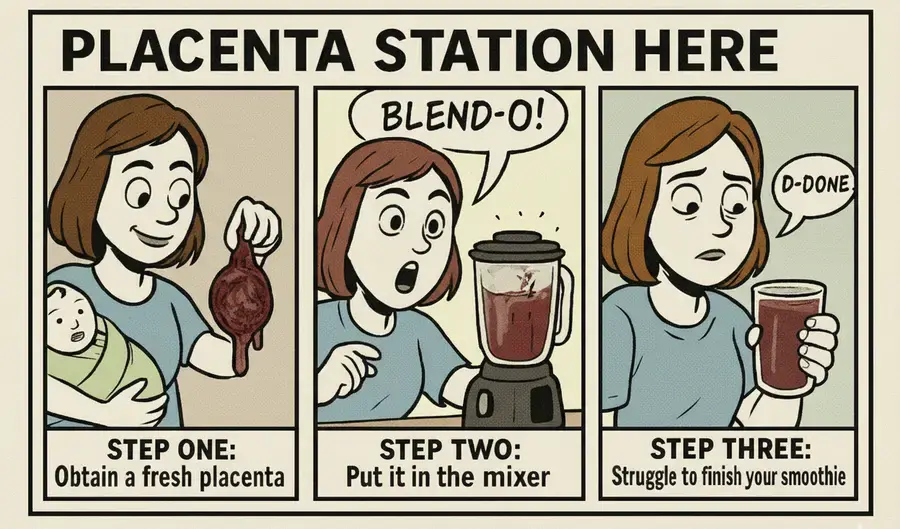
Picture this: you’ve just welcomed a new bundle of joy into the world, you’re exhausted, hormonal, and the hospital cafeteria’s Jell-O isn’t cutting it. Someone leans in and whispers, “Have you tried… drinking your placenta in a smoothie?”
Yep, welcome to the bizarre wellness trend of placenta smoothies and pills, where new moms are turning the once-discarded afterbirth into a post-birth snack or capsule collection. Because apparently, nothing says “self-care” like a frothy placenta latte with a dusting of chia seeds.
What on Earth Is Happening Here?
Here’s the gist: some new mothers believe consuming their placenta—either blended raw into a berry smoothie or dehydrated into pill form—helps speed up recovery, boost energy, balance hormones, and even ward off postpartum depression. It’s like recycling, but way more personal.
The practice isn’t just an underground internet challenge either. Celebrities from Kim Kardashian to January Jones have reportedly hopped on the placenta train, Instagramming their capsules like they’re the latest Goop-approved superfood. In fact, search #placentapills and you’ll find hundreds of proud new moms posing with jars of what look suspiciously like herbal vitamins… but are definitely not from Whole Foods.
Why Do People Believe This?
Here’s where it gets fascinating: in the animal kingdom, placenta-eating (scientifically called placentophagy) is totally normal. Most mammals chow down on it right after giving birth. Scientists believe they do this for a cocktail of reasons: to hide the scent from predators, to get quick nutrition, or simply because it’s the world’s weirdest snack pack.
Humans, however, largely skipped this tradition. Historically, we left the placenta to ceremonial burials, spiritual rituals, or just the hospital biohazard bin. But in the age of wellness influencers and TikTok detox trends, the placenta has staged a surprising comeback—this time served in mason jars with stainless steel straws.
Advocates argue the placenta is rich in iron, hormones, and nutrients that mothers lose during childbirth. In theory, consuming it might help restore balance. The problem? Science says… not really. Studies have consistently found no measurable benefits. Doctors and midwives often caution against it, pointing out that dehydration doesn’t magically remove bacteria or heavy metals lurking in the tissue. Translation: your placenta pill could come with a side of food poisoning.
A Little History of Placenta Enthusiasm
This isn’t just a millennial fad. In the 1970s, the hippie health movement flirted with placenta consumption, often recommending placenta stew recipes (yes, those existed). In Traditional Chinese Medicine, dried placenta—called zi he che—has been used for centuries as a remedy for fatigue or infertility, though it was usually from donated material, not your own kitchen.
Fast-forward to today, and the wellness industry has given the placenta a glossy rebrand. Instead of rustic stews, you’ll find boutique “placenta encapsulation services” that turn your afterbirth into neat capsules for $200–$400. Some even offer placenta tinctures, chocolates, or prints (because why not make wall art out of it, too?).
The Instagram Aesthetic of the Weird
The rise of placenta lattes and pills fits neatly into the broader trend of aesthetic health rituals. If it can be packaged in a pastel tin or photographed next to succulents, it’s got marketing potential. For new moms sharing every milestone online, placenta pills are less about actual health benefits and more about participating in a shiny, supportive wellness narrative. After all, a placenta latte hashtagged with #MomLife might earn you likes—even if it tastes like… well, we probably don’t want to know.
So, Should You Try It?
If you’re tempted, know this: there’s no proven medical benefit, but there are potential risks. The Centers for Disease Control has even flagged cases where placenta capsules carried dangerous bacteria. Doctors recommend sticking with actual iron supplements and rest rather than whipping up a placenta shake.
But whether you find the idea repulsive or revolutionary, it’s undeniably one of the strangest examples of modern wellness culture—equal parts biology, mythology, and Instagram theater.
The Takeaway
The placenta is the ultimate overachiever—it nourishes life in the womb and somehow manages to resurface as a smoothie ingredient on Pinterest boards. Whether you view it as a sacred, life-giving organ or a very questionable protein source, one thing’s clear: in the world of bizarre wellness trends, placenta smoothies and pills take the cake… or at least the smoothie straw.
