
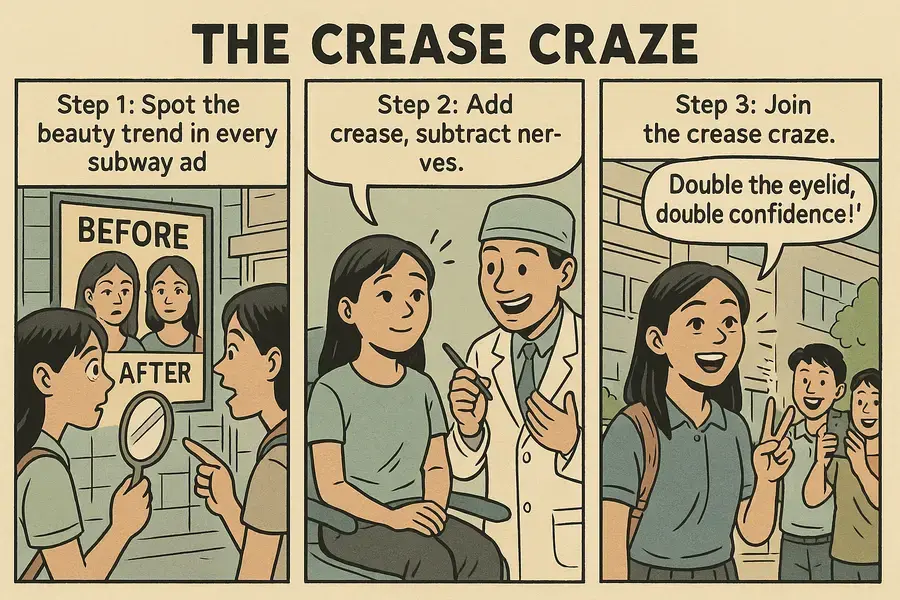
In South Korea, cosmetic procedures are not only widely accepted but also deeply embedded in modern culture. Among the many options available, double eyelid surgery stands out as one of the most common. This procedure creates a visible crease in the eyelid, resulting in what many consider a more “open” or “Westernized” eye shape. For some, it is viewed as a path to beauty and confidence. For others, it sparks debates about cultural identity, beauty standards, and societal pressure.
A Cultural Context for Beauty
South Korea is renowned for its emphasis on physical appearance. From a booming skincare industry to globally popular K-pop idols, beauty plays a central role in public and private life. In this environment, double eyelid surgery has become one of the most requested procedures, often performed on both men and women.
The operation is so mainstream that it is sometimes compared to orthodontic work in Western countries—seen less as vanity and more as self-improvement. Parents have even been known to gift the procedure to their children as a graduation present, reflecting how normalized it has become in Korean society.
What Is Double Eyelid Surgery?
Double eyelid surgery, medically known as blepharoplasty, involves creating a crease in the upper eyelid where one does not naturally exist. While some East Asians naturally have a double eyelid, many are born with a single lid, also called a “monolid.”
Surgeons achieve the effect by either removing a small amount of skin and fat or by stitching the eyelid to form a permanent fold. The operation is relatively quick, with recovery often lasting just a couple of weeks. Clinics across Seoul and other major cities advertise the surgery openly, and many cater to international visitors who travel to South Korea specifically for cosmetic enhancements.
Why Is It So Popular?
Several factors fuel the popularity of double eyelid surgery:
- Beauty Standards: Larger eyes are often considered attractive in Korean culture, influenced in part by globalized ideals and media portrayals. The crease makes the eye appear bigger and more defined.
- K-Pop and Media Influence: Idols, actors, and public figures frequently have double eyelids, whether naturally or surgically achieved. Their look sets the tone for what is considered fashionable and desirable.
- Social Pressure: Appearance plays a role in everything from job interviews to personal relationships. Some believe that having double eyelids may improve opportunities in work and social standing.
- Affordability and Accessibility: Compared to many Western countries, cosmetic surgery in South Korea is both more affordable and more accessible. Specialized clinics offer package deals, flexible payment options, and even consultations in multiple languages.
Criticism and Debate
Despite its popularity, the procedure is not without controversy. Critics argue that the demand for double eyelids reflects a lingering preference for Westernized beauty standards, suggesting that colonial history and global cultural influences have shaped ideals in ways that undermine traditional features.
Some view the surgery as reinforcing narrow definitions of beauty, placing unnecessary pressure on young people to conform. Others worry that normalizing surgery for teenagers sends a damaging message about self-acceptance.
On the other hand, many South Koreans argue that the choice is a personal one. For them, undergoing the procedure is less about copying Western ideals and more about aligning with local cultural norms of attractiveness. Just as people in other countries seek braces, tanning, or cosmetic dentistry, Koreans see double eyelid surgery as one of many available tools for self-expression.
A Global Phenomenon
South Korea has become a global hub for medical tourism, and double eyelid surgery is often at the top of international patients’ lists. Travelers from China, Japan, Southeast Asia, and even Western countries flock to Seoul’s Gangnam district, which is lined with clinics offering procedures ranging from subtle enhancements to dramatic makeovers.
This trend highlights South Korea’s role in shaping global beauty industries, exporting not just K-pop and cosmetics but also medical expertise. The country’s surgeons are considered some of the most skilled in the world, with specialized training and high patient volumes giving them unmatched experience.
The Future of Beauty in South Korea
While double eyelid surgery remains dominant, attitudes toward beauty are shifting. Younger generations are beginning to push back against rigid standards, embracing diversity in looks and challenging the idea that surgery is a necessity. Campaigns for natural beauty and self-acceptance have gained traction, even as cosmetic procedures continue to flourish.
Still, it is clear that double eyelid surgery has become more than a passing trend—it is a deeply ingrained part of South Korea’s beauty culture. For some, it symbolizes opportunity and empowerment. For others, it represents conformity and external pressure. In either case, it has cemented its place as one of the most defining cosmetic procedures of the modern era.
Conclusion
The prevalence of double eyelid surgery in South Korea speaks volumes about the intersection of culture, beauty, and identity. It is at once a personal choice and a social statement, reflecting both global influence and local tradition. Whether embraced or criticized, the procedure underscores how far people are willing to go in pursuit of the ideals set before them.
As beauty standards continue to evolve, so too will the debates surrounding them. But for now, the crease remains—an unmistakable mark of South Korea’s complex relationship with image, aspiration, and cultural identity.
