
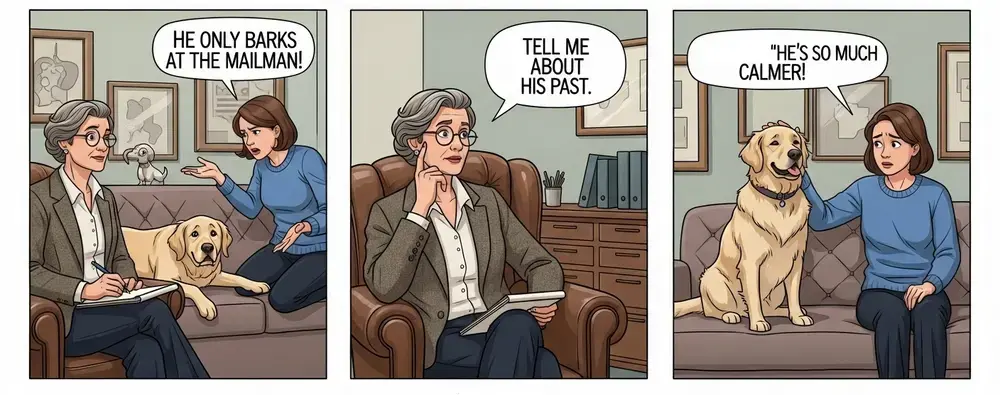
If you’ve ever watched your cat stare into the corner like it sees a ghost—or caught your dog having a meltdown because the chew toy touched the floor funny—you’ve probably wondered: who, exactly, fixes this? Enter the pet psychologist, the quiet superhero of the animal kingdom, armed with notebooks, treats, and a deep understanding of why pets act out. This isn’t some fringe profession born from bored pet owners with too much disposable income. The pet psychologist is a bona fide behavioral detective, and their world is far stranger than you think.
At its core, a pet psychologist is an animal behaviorist trained to diagnose and treat everything from separation anxiety to furniture-destroying rage. These specialists handle behavioral mysteries that would stump the average owner. A dog won’t sleep unless the TV is tuned to cooking shows. A parrot keeps shouting the wrong swear word. A hamster has begun hoarding only green objects. The pet psychologist walks into each of these cases like a seasoned private investigator, except the clients don’t speak human and the crime scenes usually involve shredded pillows.
The roots of this profession go way back. Early research into animal behavior wasn’t exactly glamorous—it involved long hours watching ducks, ants, and wolves do their thing—but it laid the foundation for modern animal behavior consult practices. Over time, as pets transitioned from barnyard workers to full-fledged family members, people wanted answers to questions that previously went unasked. Why does the cat attack the mail? Why does the dog sob every time the microwave beeps? Why does the rabbit demand room-temperature kale? As pet ownership grew, so did the need for someone who could decode the furry chaos.
A typical pet psychologist doesn’t just show up, toss out a few generic tips, and call it a day. They approach a case like a forensic profiler. First comes observation. What’s the pet doing? When does the odd behavior happen? How does the home environment contribute? Many surprising culprits emerge here: the neighbor’s wind chimes, a squeaky hinge on the pantry door, the slow betrayal of changing a cat’s food brand by 3 percent. These specialists pick up on subtle environmental stressors most owners never notice.
Then comes the history. Not the owner’s history—though sometimes that plays a role—but the pet’s. A pet psychologist will dig through experiences that shaped the animal’s temperament. A dog that panics during thunderstorms may have been exposed to sudden loud noises during puppyhood. A cat that hisses at everyone over six feet tall might be responding to a single traumatic encounter. Understanding this context is the key to cracking cases that seem hopeless.
But here’s the part people don’t expect: pet psychologists are often treating the humans as much as the pets. One of the biggest revelations in the field is how owners inadvertently reinforce the very behavior they hope will stop. Comforting a dog during a meltdown may teach the dog that meltdowns bring more cuddles. Laughing when a bird repeats a choice four-letter word may encourage the bird to unleash its comedic potential. The pet psychologist has to guide the humans into healthier patterns without making them feel like the problem—which is a professional skill all on its own.
A surprising amount of science supports these approaches. Studies on pet anxiety solutions show how powerful routines, enrichment, and small environmental tweaks can be. While it may look like magic when a formerly chaotic pet suddenly starts behaving, it’s really neuroscience meeting patience. Animals respond to patterns, consistency, and tiny shifts in their environment with astonishing sensitivity. A single new routine—such as a set walking schedule or structured playtime—can redirect a pet’s entire emotional landscape.
Of course, some cases veer into the spectacularly odd. Dogs that only bark at certain television characters. Cats that sleep exclusively in empty cereal boxes. Birds that insist on performing emotional support duties for other household pets. Each case deepens the pet psychologist’s catalog of weirdness. And yet, each case reinforces the same truth: animals have rich inner lives, far more complex than most people assume.
There’s also a cultural shift fueling this field. Pets are longer-lived, more integrated into human households, and more expressive than ever. People want to understand their companions—not just feed them and hope for the best. When the average household treats pets like children, it’s no surprise that the need for specialists grows right alongside. The pet psychologist isn’t some quirky fringe character anymore. They’re a translator between species, bridging the communication gap with science, empathy, and yes, plenty of treats.
So the next time your pet exhibits a behavior that seems impossible to decode—like rolling dramatically on the floor whenever you wear a certain hat—remember that somewhere out there is a professional who has probably seen something even stranger. A pet psychologist has heard every confession an animal can’t voice and helped countless owners understand their furry, feathery, or scaly companions a little better.
The biggest takeaway? Your pet isn’t weird. Well, not only weird. It’s communicating in its own language. And in a world where people constantly misunderstand one another, maybe it makes perfect sense that we’d need someone who specializes in decoding tiny creatures with big emotions.
