
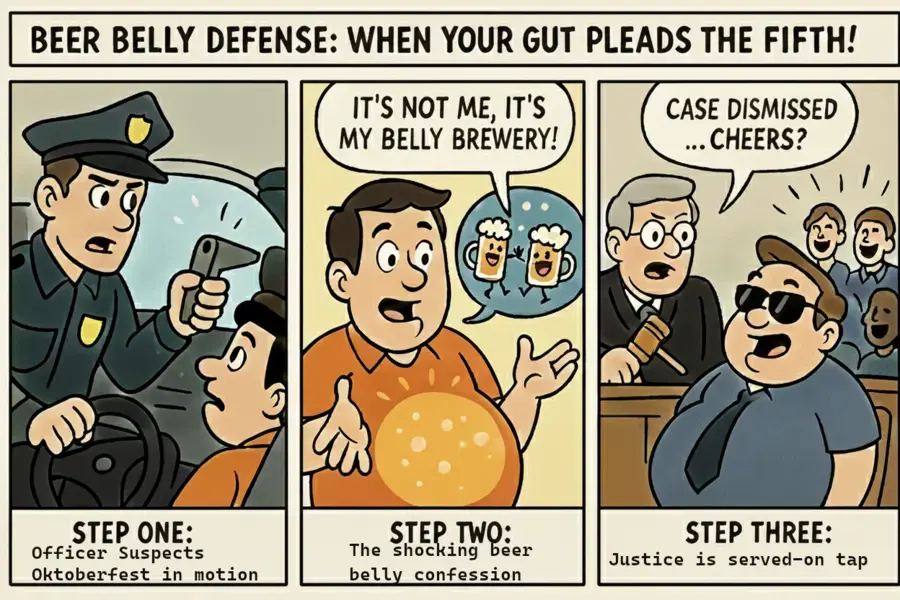
Picture this: you’re cruising down a German highway in 2005, blue lights flash in the rearview, and before you know it, you’re blowing into a breathalyzer that basically accuses you of single-handedly emptying Oktoberfest. But instead of muttering “I only had two beers,” one driver pulled out the weirdest legal card imaginable: “It wasn’t me, it was my belly.”
Yes, ladies and gentlemen, welcome to the bizarre world of the “Beer Belly Defense.”
When Your Gut Is a Brewery
The man in question wasn’t denying the sky-high blood alcohol level. Nope. He admitted the evidence but claimed he never touched a drop. His explanation? He had a rare medical condition called auto-brewery syndrome. Imagine your digestive system moonlighting as a craft beer startup. Carbs go in, lager comes out. It’s basically Willy Wonka’s brewery—except inside your intestines and decidedly less fun at parties.
This isn’t fiction. Auto-brewery syndrome (ABS for short) is a genuine, though extremely rare, condition. Yeast in the gut ferments carbohydrates into ethanol. So after a big bowl of pasta, someone with ABS can become tipsy without so much as clinking glasses. Dinner and drinks—literally the same thing.
Courtroom Drama, With Extra Foam
Naturally, the police weren’t buying this belly-brewer story at first. But the case took a turn once medical tests confirmed the man really did have auto-brewery syndrome. Suddenly, the courtroom wasn’t just debating his driving—it was debating biology, chemistry, and the very meaning of criminal responsibility.
In criminal law, there’s a principle called mens rea (Latin for “guilty mind”). To be guilty of a crime, it’s not enough to just do the thing—you have to intend to do it. Drinking and then driving? Bad intent. Accidentally turning into a human beer keg after spaghetti night? Not so much.
His defense team argued that since he hadn’t knowingly consumed alcohol, he lacked the “guilty mind” needed for a DUI conviction. Astonishingly, the court agreed. The man walked out acquitted, with his record clean but his gut still brewing away.
How Rare Is This, Really?
Before you go thinking, “Sweet, free beer on demand!” let’s pump the brakes. Auto-brewery syndrome is incredibly rare and comes with way more problems than perks. Imagine feeling drunk after a sandwich, or waking up hungover when the wildest thing you did last night was eat garlic bread. Not exactly an enviable condition.
Doctors suspect the syndrome happens when yeast like Saccharomyces cerevisiae (a.k.a. brewer’s yeast) overpopulates the gut. It’s like the digestive system throws a frat party, except no one actually invited it. Treatments often involve antifungal meds and strict low-carb diets—so goodbye to pizza, pasta, and all the things that fuel your accidental brewery.
Why This Case Still Matters
On the surface, it sounds like the setup for a German sitcom: “Beer Belly Man Beats the Rap.” But the case highlights something bigger—the way science forces the law to evolve. Courts usually assume people are in control of their bodies and choices. But what happens when your biology hijacks you?
This legal curveball forced the justice system to admit: sometimes, intent isn’t clear-cut. Sometimes, the difference between “drunk driver” and “victim of weird biology” is hidden in a petri dish. It’s a humbling reminder that our bodies can be weirder—and more legally complicated—than we realize.
Bottom Line: Fear the Beer Within
So next time someone jokes about their “beer belly,” remember—it might be more literal than you think. The German case of 2005 wasn’t just a quirky headline; it was a moment where science, law, and sheer weirdness collided. And while auto-brewery syndrome won’t be saving every weekend warrior from a DUI, it does prove that the truth really can be stranger than fiction.
In other words: sometimes, your gut really does have a mind—and apparently, a brewery—of its own.
