
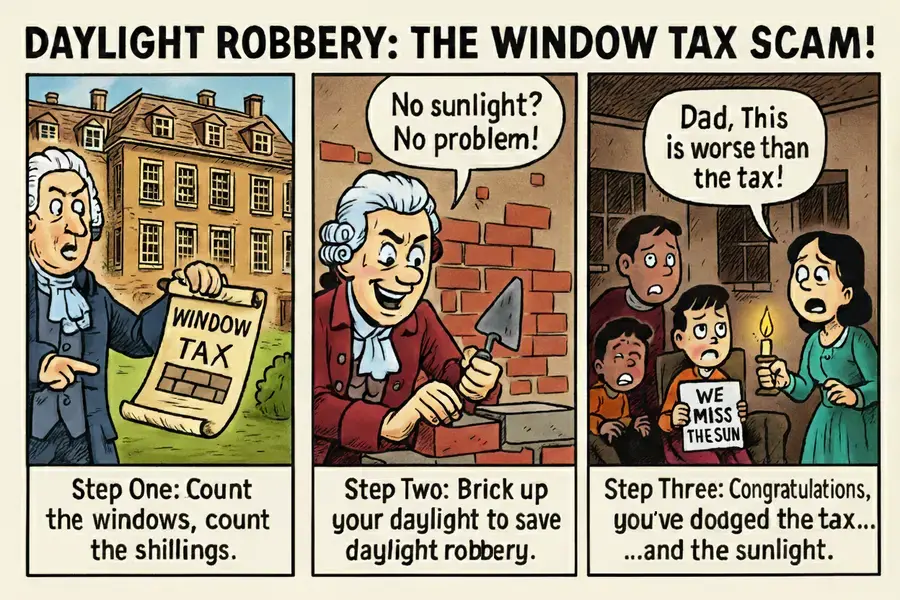
Imagine being so fed up with taxes that you literally brick up your windows to avoid paying them. Sounds like the set-up for a Monty Python sketch, right? Well, buckle up, because this actually happened.
Back in 1696, the British government cooked up a new way to squeeze money out of the public purse: a window tax. Yes, you read that correctly. Not income. Not land. Not even tea (that came later). They decided that the number of windows in your house was a good measure of how rich you were—and therefore, how much you should fork over to the Crown. More glass meant more cash.
The Daylight Robbery Begins
The logic was simple (and by “simple,” I mean borderline ridiculous). If you had a big house with lots of windows, you probably had enough money to pay higher taxes. If you lived in a dark, poky little cottage, you’d pay less. On paper, it looked like an early attempt at progressive taxation. In reality, it was daylight robbery—literally.
The law forced homeowners to pay based on how many windows they had. At first, it seemed harmless. But as rates increased over time, households started scrambling for ways to dodge the bill. Their solution? Bricking up perfectly good windows.
Walk around many old British towns today and you’ll still see strange patterns of bricked-in openings on otherwise symmetrical houses. That’s not a quirky design choice—it’s tax evasion carved into brick and mortar.
A Darker Side Effect
Of course, blocking out windows had a nasty side effect: it made homes gloomier, stuffier, and far less healthy. Natural light and fresh air were sacrificed at the altar of saving a few shillings. Critics claimed the tax literally bred disease by forcing families to live in damp, unventilated rooms.
This was especially brutal during the Industrial Revolution when entire families were already crammed into tiny spaces. Less light meant worse living conditions, leading reformers to brand the policy as cruel and backward. Newspapers of the time even dubbed it “a tax on health and happiness.”
Why Windows, Though?
Why not just tax something more obvious, like income or property size? Well, here’s the twist: Britain didn’t have a proper income tax system back then. Politicians were scrambling for a tax that was visible, easy to count, and hard to dispute. Windows were public and obvious—no need to send auditors rifling through your ledgers.
It was lazy governance, sure, but efficient. A quick glance at your house told tax collectors everything they needed to know. Forget the IRS. This was more like the “Ministry of Peeking Through Curtains.”
An Unpopular Legacy
The window tax stuck around for over 150 years, despite public outrage. Reformers railed against it, doctors warned it was killing people, and homeowners cursed every brick they were forced to stack in their windowsills. But the government loved the revenue too much to let go.
It wasn’t until 1851—thanks to relentless pressure—that the tax was finally abolished. By then, it had earned the nickname “daylight robbery,” a phrase many people still toss around today without realizing its literal origins.
The Weird Takeaway
So, the next time you grumble about paying taxes, spare a thought for your 18th-century British counterpart who had to choose between sunlight and savings. Want fresh air in the bedroom? That’ll cost you. Prefer to avoid coughing up to the Crown? Enjoy your brick wall view.
The window tax reminds us of two things:
- Governments have always been creative (if not downright bizarre) in finding ways to fund themselves.
- Humanity will go to absurd lengths to avoid paying up—even if it means turning your home into a medieval dungeon.
So look around your house right now. Count those windows. Now imagine calculating your annual tax bill based on them. Still think your property tax is the worst thing in the world?
