
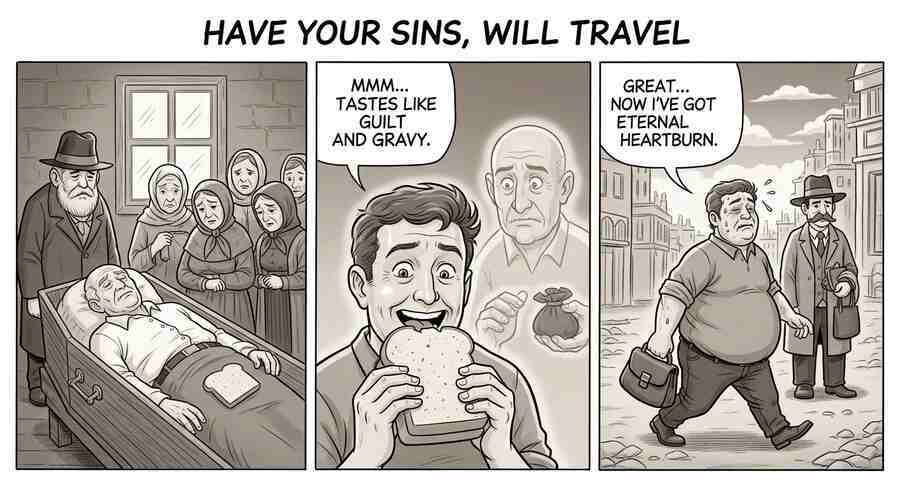
In the shadowy hills of 19th-century rural Wales, death brought with it not only mourning but also an unusual ritual: the hiring of a sin-eater. These mysterious figures were paid a small fee—or sometimes just a meal and a drink—to perform a strange and somber task.
At funerals, a piece of bread (and sometimes ale) was placed on the chest of the deceased. The sin-eater would then consume the bread, a symbolic act meant to absorb the dead person’s sins, ensuring their soul could pass more freely into the afterlife. By eating the food that had “soaked up” spiritual guilt, the sin-eater took the burden upon themselves.
The practice was rooted in old folk beliefs, especially in communities where access to formal clergy was scarce or costly. It represented a blend of superstition, religion, and desperation—a way for grieving families to find comfort in the thought that their loved one had been spiritually cleansed.
But sin-eaters lived as outcasts. Feared for carrying the spiritual filth of others, they often led lonely, marginalized lives. Communities needed them, yet shunned them at the same time. Few would invite them to gatherings or even speak openly with them beyond the ritual itself.
The tradition faded by the late 19th century as organized religion, modernization, and skepticism pushed such customs aside. Yet the image of the sin-eater endures as one of the strangest roles in funeral history—a haunting reminder of how far people were willing to go for peace of mind at death’s door.
Weirdopedia Verdict: Sin-eaters may have been the first professional “ghostbusters”—except instead of catching spirits, they swallowed sins.
